We Can Change the World
Summary:
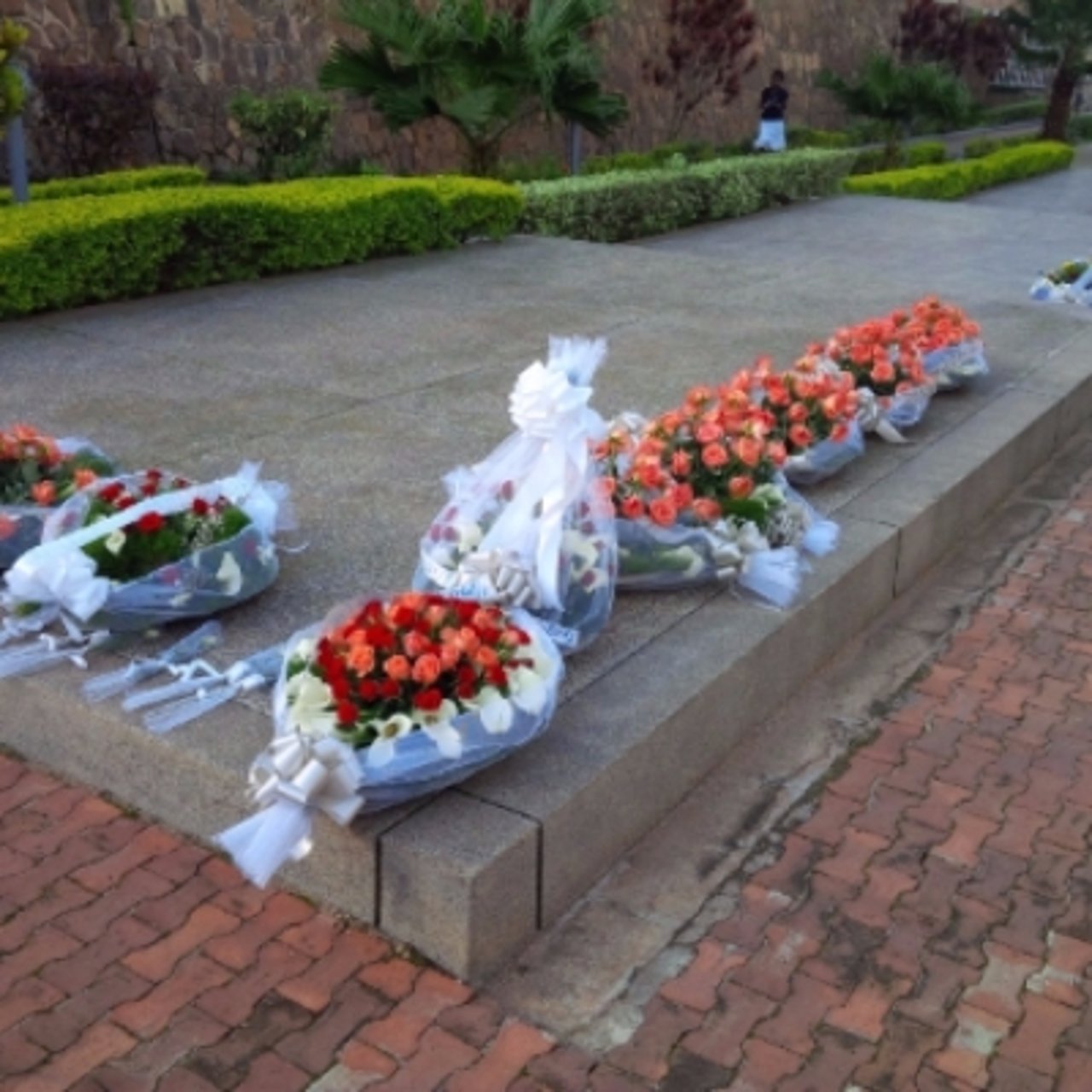
As I reflect on 2015, I think that no other experiences will have the lasting impact of my visits to the genocide memorial sites in Rwanda, both the Gisozi memorial in Kigali and memorial site at the Ntarama church. I particularly remember walking among the mass graves at the Memorial Centre in Kigali where more than 250,000 are buried, seeing the bouquets of flowers left in memory of family members who had perished, struggling to hold my emotions together, and being approached by another visitor. He said, "What is the meaning of these flowers? Are they all to honour someone buried here? I’m from Uganda, and I don’t understand! How is this possible?” I tried to answer but I couldn’t get the words out. The best I could do was shake my head, wave my hands helplessly, and walk away. I remember as well reading the words of genocide survivor Felicien Ntagengwa in the Memorial Centre, "Si tu me connaissais et si tu te connaissais vraiment, tu ne m’aurais pas tué” (If you knew me, and if you really knew yourself, you would not have killed me) – but 800,000 did die, and (notwithstanding Ntagengwa’s appeal to the dignity and worth of every human being) millions more died in the conflicts that ravaged the Democratic Republic of Congo for the next decade and continue to this day.
Like the picture of the mass graves in Rwanda, the photo of little Alan Kurdi lying lifeless on a Turkish beach is inextricably linked with my memory of 2015. Like many others, I had offered passing attention to the Syrian refugee crisis, but the image of Alan Kurdi struck me like a blow to the chest. More than all the news reports I had read or listened to up to that point, it demanded that I pay attention to this epochal migration of those who are largely poor, vulnerable, desperate victims of devastating conflict in their country. The numbers are staggering—as of December 31, UNHCR reports that they have registered 4,602,203 Syrian refugees—an increase of almost 43% over the same time one year before. Little Alan is among over 3,770 migrants who lost their lives crossing the Mediterranean last year. Against these numbers, Canada’s efforts seem like a drop in the bucket, but as challenging and difficult as it is, I am glad that we are doing it. In my opinion, Godevaluates the justness of our society by how we respond to dispossessed people like these, along with the homeless, migrant workers and other vulnerable members of our communities.

Is there hope for our world? I haven’t even spoken about such grave concerns as the rampant gang violence in Central America, or the South Sudan refugee crisis, or the war in Yemen. Can we do anything to prevent the next genocide? How does the world solve the conundrum that is Syria? These are among the questions on our minds as we begin 2016. But of course there is hope, for at least two reasons—the first reason being that hope is intrinsic to what it means to be a follower of God, if not a member of the human race. "Hope springs eternal in the human breast.” But this hope is not delusional thinking—it is the expectant desire to realize those things we have seen with our eyes of faith. Jim Wallis says, "Hope means believing in spite of the evidence and then watching the evidence change." At IJM, an aspect of our vision is to prove that justice for the poor is possible. We believed it first and now we have the evidence to prove that is possible. We’ve seen the evidence change in Cambodia, where fifteen years ago, the Cambodian government estimated that the prevalence of minors being exploited in Phnom Penh’s sex industry was as high as 15–30%. Today, as a result of collaboration between Cambodian leaders, police, courts, social services and the NGO community, the prevalence of minors 15 years and younger in the three largest sex markets in the country is 0.1%. Through courage, perseverance and collaboration, hope wins over seemingly impossible odds. We can change the world. This is a statement of faith.
The second reason I have hope is that there is a growing body of evidence that ordinary people acting courageously are changing the world. Perhaps no recent news story illustrates this confidence as well as the account of Muslims in Kenya protecting Christians during an attack on a bus by Al-Shabab. When the extremists ordered the passengers on the bus to separate into two groups, Muslims and non-Muslims, the Muslim passengers refused and even gave their head scarves to the non-Muslims so they could not be identified as easily. Evil hasn’t a chance against such courage. For us here in Canada, it’s important that we not surrender responsibility to our elected leaders and assume that they will act wisely and determinedly on our behalf to address the ills of our society and our world—although we should hope that they do. We all need to find a space of need and opportunity in our society where we can touch peoples’ lives and contribute to making the world a better place. I could paraphrase the well-known axiom often attributed to Edmund Burke and say, "All it takes for good to triumph is for good people to do something.” We may not think we are able to change the world, but we can all change someoneor something.
I was recently introduced to a young singer/songwriter from Sarnia named Renee Card, and I’d like to leave with you her song, "Change the World” in the hope that it will encourage you to make your own personal contribution to changing the world.
Now is the time
to stand up and step out
No room for fear
It’s time to make ourselves known
Go, time to go
Step out of our comfort zone
Refuse to be a light
hidden under a bowl
There’s no time to stand in the shadows
No time to be hiding our face
We can no longer be silent
Or the rocks will cry out in our place
Chorus:
We can change the world
We can change the world
Now is the time to stand up and fight
We can change the world
Stop, people stop
Believing it won't start with you
And if we decide to move
We’ll be amazed at what God’s love can do
We cannot be beaten and broken
For we are the body of Christ
We were not given a spirit of fear
But of power and love and sound mind
Stop waiting for the perfect time
The perfect time is now
There’s purpose in all our lives
Let’s choose to be the spark
That sets the world on fire
Let’s be unstoppable
Let’s make His power undeniable
We can change the world!