From Bonded Labour to the Ballot Box: Nine Survivors Win Local Elections
Summary:
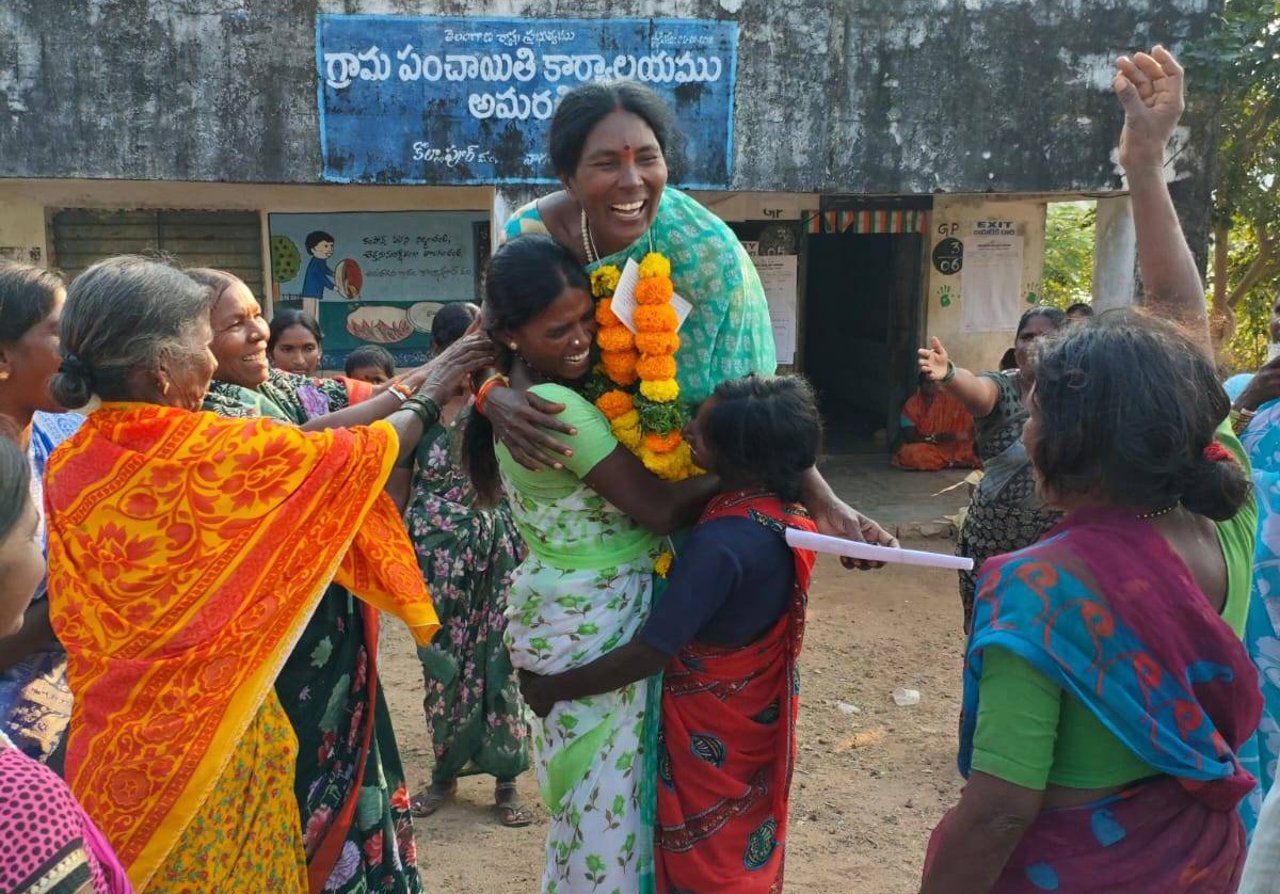
Lingamma beamed as she rose above the crowd, hoisted onto the shoulders of her female supporters and friends.
In that moment, they were not merely celebrating her victory in a local election. They were lifting one of their own from the margins into public leadership.
Lingamma was just one of nine survivors of bonded labor who won local government elections in one state in with IJM works in December 2025. Three men and five women will serve as ward members in their villages (each representing several dozen households), and Lingamma will serve as her village’s Sarpanch (similar to a mayor).
Reflecting on these victories, one IJM leader shared, “Ten years ago, these individuals were trapped in bondage and never imagined they could one day lead communities. Today, in 2026, we are witnessing a remarkable transformation… In villages where their former oppressors still live, these leaders have risen far beyond—proving that hope and determination can rewrite destinies.”
Just a decade ago, this outcome for Lingamma would have been unthinkable.
Until 2016, she was among 45 families from a marginalized tribal community in Amaragiri Village who were trapped in a brutal system of bonded labour. Three powerful businessmen had taken hold of the local fishing trade and forced local fishers to sell everything to them. They controlled families like Lingamma’s through predatory debts, coercion, and violence. For more than 30 years, these families lived in fear and deep poverty, without anyone to stand up for them.
Everything changed in January 2016, when IJM and our partner Foundation for Sustainable Development (FSD) supported authorities in rescuing the families from decades of abuse.
In the years that followed, the survivors came together to rebuild their lives with dignity and purpose. They formed the Amaragiri Released Bonded Labourers Association (RBLA), engaged government benefit programs to improve their lives, and even established their own fish processing facility to secure economic independence. Livelihoods stabilized, children returned to school, and the whole village began a determined journey from survival to self-governance.
During this time Lingamma emerged as a steady and trusted leader. She led RBLA meetings, followed up consistently with government agencies for benefits, supported families in their rehabilitation, and worked closely with the community on economic empowerment projects.
After her election win, she shared, “This opportunity is not just my victory—it is our community’s victory. As Sarpanch, I want to improve our village by ensuring proper roads, clean drinking water, better health services, and good education for our children. I am committed to working for the well-being and progress of every family in our village.”
Her recent election victory builds on a growing legacy of survivor leadership in Amaragiri.
In previous elections, survivor leader Mallaiah was elected as the vice-Sarpanch. During his tenure, he secured a government bus service for the village, facilitated housing for survivor families, and successfully advocated for a cold storage facility for fish—strengthening livelihoods across the community.
One IJM staff member explained, “Mallaiah’s leadership laid the foundation. This election has carried it forward. Today, Amaragiri is no longer a village defined by bondage. It is a village led by survivors.”
Lingamma adds, “I never dreamed of having a life of freedom like this. I am grateful and would like to use every opportunity to help and develop my community and my village.”